
The second trimester is often called the “golden period” of pregnancy—energy returns, nausea fades, and your baby bump grows beautifully. It’s the perfect time to enjoy travel, connect with your baby, and prepare for the journey ahead. From safe adventures to meaningful moments, here’s how to make the most of this special time.
Key Takeaways
- Plan a babymoon: Many expecting parents choose the 2nd trimester for a relaxing getaway, when energy levels are up and morning sickness is usually gone.
- Start prenatal classes: This is an ideal time to join childbirth education or parenting workshops to feel more prepared.
- Enjoy safe travel: With doctor’s approval, you can explore destinations—just avoid high-risk areas and long-haul flights late in the trimester.
- Bond with your baby: Feeling kicks and talking or singing to your baby strengthens your connection.
- Focus on nutrition and movement: Eat balanced meals and stay active with prenatal yoga or gentle walks.
- Update your wardrobe: Invest in comfortable maternity clothes that support your growing bump.
- Begin baby-proofing your home: Start small projects like securing furniture or choosing a nursery theme.
Quick Answers to Common Questions
Is it safe to travel during the second trimester?
Yes, with your doctor’s approval. Most women travel safely between 14 and 28 weeks, as long as they avoid high-risk destinations and stay hydrated.
Check the latest prices and available rooms before they sell out.
When can I feel my baby move?
Many women feel first movements between 18 and 25 weeks, often described as flutters or bubbles.
Can I still exercise in the second trimester?
Yes, gentle exercise like walking, swimming, or prenatal yoga is encouraged. Avoid high-impact or contact sports.
Should I take prenatal vitamins?
Yes, continue taking prenatal vitamins, especially folic acid, iron, and DHA, to support your baby’s development.
When should I start baby-proofing?
You can begin in the second trimester. Start with small, easy fixes and continue gradually as your due date approaches.
📑 Table of Contents
Welcome to the 2nd Trimester: Your Golden Window
The second trimester—weeks 13 to 27—is often the most enjoyable phase of pregnancy. For many women, the exhaustion and nausea of the first trimester fade, replaced by renewed energy and a growing sense of excitement. Your baby is developing rapidly, and you’ll likely start feeling those first flutters of movement, known as “quickening.” This is also when your bump becomes more noticeable, and people begin to recognize your pregnancy.
With fewer physical discomforts and more stamina, this trimester offers a wonderful opportunity to enjoy life, plan ahead, and connect with your baby. Whether you’re dreaming of a babymoon, preparing for parenthood, or simply savoring the moment, there’s so much you can do to make this time special.
Plan a Babymoon: A Relaxing Escape
Find the Best Accommodation Deals
Compare prices from multiple booking platforms and find the best option for your stay.
Compare Hotel PricesVisual guide about Things to Do in 2nd Trimester
Image source: i.pinimg.com
Find the Best Accommodation Deals
Compare prices from multiple booking platforms and discover the best stay options available.
⭐ Trusted by thousands of travelers
💰 Budget to luxury options available
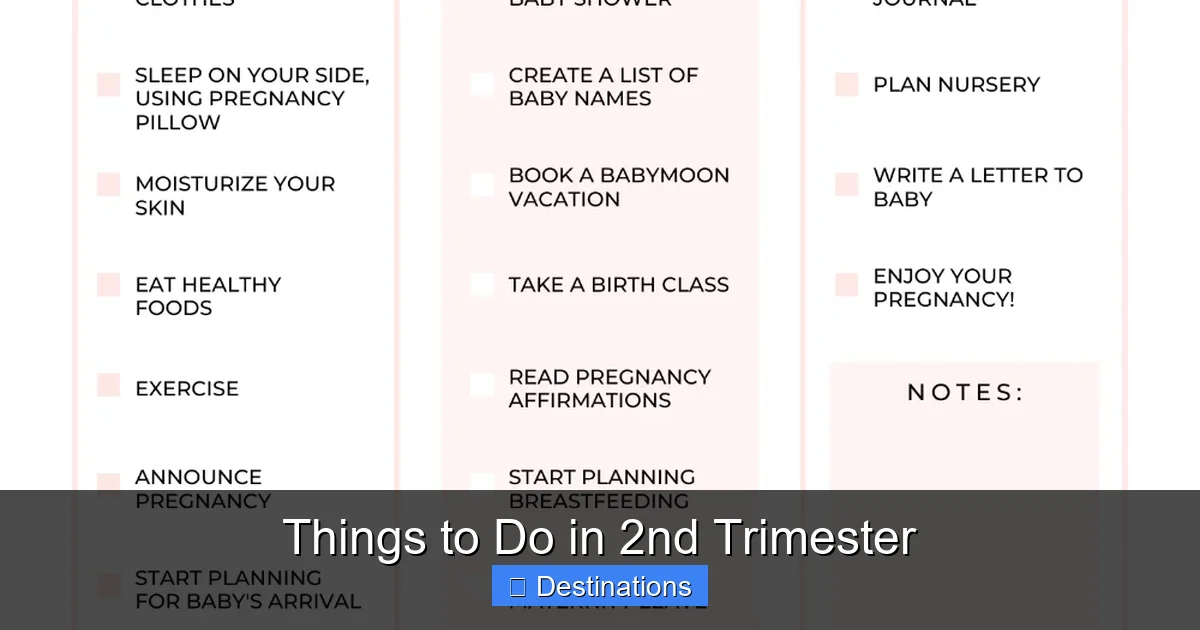
Many couples choose the second trimester for a babymoon—a final vacation before baby arrives. It’s the sweet spot: you’re likely feeling your best, and travel is still comfortable and safe with proper planning.
Choose the Right Destination
Opt for destinations with good medical facilities, minimal travel time, and a relaxing vibe. Coastal towns, mountain retreats, or cultural cities with easy access to care are great choices. For example, a trip to Miami pre or post-cruise offers beaches, dining, and short flights, making it ideal for expecting travelers.
Travel Tips for Moms-to-Be
Always carry a copy of your prenatal records, stay hydrated, and take breaks during long drives or walks. Avoid destinations with high altitudes, extreme heat, or disease risks like Zika. If flying, choose an aisle seat for easier bathroom access and wear compression socks to reduce swelling.
Best Stay Deals Available
Compare prices across top booking platforms and find the best deal for your stay.
Check Available RoomsStart Prenatal Classes and Baby Prep

Visual guide about Things to Do in 2nd Trimester
Image source: millenniumhospital.ae
Now is the perfect time to begin preparing for labor, birth, and parenting. Prenatal classes offer valuable information and help reduce anxiety.
Types of Classes to Consider
Look for childbirth education, breastfeeding workshops, and newborn care sessions. Many hospitals and birthing centers offer these, often in the evening or on weekends. You can also find online options if in-person attendance is difficult.
Involve Your Partner
Bring your partner or support person to classes. It helps them feel involved and prepares them for their role during labor and beyond. Plus, it’s a great way to bond as a team.
Enjoy Safe Adventures and Local Exploration

Visual guide about Things to Do in 2nd Trimester
Image source: drmadhugoel.com
Just because you’re pregnant doesn’t mean you have to stay home. With a little planning, you can still enjoy local adventures and cultural experiences.
Explore Nearby Destinations
Visit nearby cities, parks, or cultural sites. For instance, if you’re near Phoenix, check out the top things to do in downtown Phoenix, like museums, cafes, and scenic walks. These low-stress outings are perfect for a day trip.
Try Gentle Activities
Prenatal yoga, swimming, and nature hikes are excellent ways to stay active. Many studios offer pregnancy-safe classes that focus on breathing, flexibility, and relaxation.
Bond with Your Baby
As your baby grows, so does your connection. The second trimester is a beautiful time to start bonding.
Talk, Sing, and Read Aloud
Your baby can hear your voice now. Talking, singing, or reading stories helps build familiarity and comfort. Play soft music or nature sounds—many babies respond to rhythm and tone.
Feel the Kicks
Around 18–25 weeks, you’ll likely feel your baby move. Keep a kick journal to track activity patterns. If movements seem unusually slow, contact your healthcare provider.
Prepare Your Home and Wardrobe
With more energy, it’s a great time to start practical preparations.
Begin Baby-Proofing
Start with simple fixes: secure heavy furniture to walls, cover electrical outlets, and store cleaning supplies out of reach. You don’t need to do it all at once—just take it step by step.
Update Your Wardrobe
Invest in a few key maternity pieces: supportive bras, stretchy pants, and breathable tops. Look for brands that offer comfort and style. Don’t forget supportive shoes—your feet may swell, so comfort is key.
Conclusion: Embrace This Joyful Phase
The second trimester is a time of growth, energy, and excitement. It’s your chance to enjoy travel, connect with your baby, and prepare for the beautiful journey ahead. Whether you’re planning a babymoon, attending classes, or simply savoring quiet moments, every experience adds to this special chapter. Listen to your body, stay safe, and celebrate each milestone.
Frequently Asked Questions
Can I fly during the second trimester?
Most airlines allow travel up to 36 weeks for single pregnancies. Check with your airline and carry a doctor’s note if required.
What foods should I avoid in the second trimester?
Avoid raw fish, unpasteurized dairy, deli meats, and high-mercury fish. Stick to well-cooked, nutrient-rich meals.
Is it normal to feel more energetic now?
Yes, many women experience a boost in energy during the second trimester as hormone levels stabilize.
When should I tell my employer about my pregnancy?
You can tell them anytime, but many wait until after the first trimester, around 12–14 weeks, when the risk of miscarriage drops.
Can I dye my hair while pregnant?
Most experts say it’s safe to dye your hair in the second trimester, especially with good ventilation and minimal scalp contact.
How often should I see my doctor now?
Typically, prenatal visits are monthly during the second trimester, unless your doctor recommends more frequent checkups.