
Choosing the right tent can make or break your outdoor adventure. The four main types of tents are dome, cabin, A-frame, and tunnel, each designed for different conditions, group sizes, and comfort levels. Whether you’re backpacking light or setting up a spacious family campsite, understanding these styles helps you pack smarter and camp safer.
When you’re planning your next outdoor getaway—whether it’s a weekend hike, a family vacation, or a solo backcountry trip—choosing the right tent is one of the most important decisions you’ll make. With so many designs and features available, it can be overwhelming to figure out which one suits your needs best. That’s where knowing the four main types of tents comes in handy.
Check the latest prices and available rooms before they sell out.
Each style has its own strengths and weaknesses, shaped by decades of innovation in materials, engineering, and user feedback. From compact dome shelters perfect for backpacking to roomy cabin tents ideal for extended stays, understanding these categories will help you match your gear to your adventure. Let’s dive into what makes each of the four primary tent types unique.
Key Takeaways
- Dome tents are lightweight, weather-resistant, and ideal for most campers due to their aerodynamic shape that sheds wind efficiently.
- Cabin tents offer maximum interior space and vertical walls, perfect for families or those who want more room to move.
- A-frame tents are simple, affordable, and easy to set up, making them great for beginners or casual campers.
- Tunnel tents provide large living areas with excellent headroom and are popular among car campers and festival-goers.
- Consider weight, size, weather resistance, and ease of setup when choosing between the four types of tents.
- Season ratings (1-season, 3-season, 4-season) help narrow down options based on climate and activity.
- Accessories like rainflys, footprint, and ventilation can significantly improve comfort and durability regardless of tent type.
📑 Table of Contents
Dome Tents: The All-Rounder Champion
The dome tent is probably the most common and versatile of the four types of tents. Its name comes from its curved, arch-like structure, which resembles a dome. This shape gives it excellent wind resistance and stability, making it a favorite among hikers, campers, and even military personnel.
One of the biggest advantages of dome tents is their simplicity. They use just two poles that cross at the top, creating a stable framework without requiring complex assembly. This also means they’re lightweight and easy to pack, which is why so many ultralight backpacking tents are built in this style.
Why Dome Tents Are So Popular
Dome tents work well in a wide range of weather conditions because their sloped sides allow snow and rain to slide off rather than pooling. Their design also reduces wind lift, a major concern during storms. Many dome tents come with full-coverage rainflys and seam sealing to keep moisture out.
For example, brands like REI Co-op and The North Face offer highly rated dome tents such as the Co-op Passage 2 and the North Face Wawona 6. These models balance affordability, durability, and comfort—making them suitable for both beginners and experienced campers.
Best For: Backpackers and Car Campers Alike
While dome tents are often associated with backpacking due to their lightweight nature, they’re also excellent for car camping. You can choose from compact 1- or 2-person versions or larger 4- to 8-person models with vestibules for extra storage.
Pro tip: Look for dome tents with multiple doors and windows for better airflow. Mesh panels in the upper sections help reduce condensation while keeping bugs out.
Find the Best Accommodation Deals
Compare prices from multiple booking platforms and find the best option for your stay.
Compare Hotel PricesCabin Tents: Spacious Comfort for Extended Stays
If you love having room to stretch out, sleep comfortably side-by-side, or even bring your dog along, then a cabin tent might be your best bet. Unlike dome tents that taper toward the top, cabin tents have near-vertical walls, giving them significantly more interior volume and headspace.
This design makes cabin tents feel more like a small house than a traditional tent. You can stand upright inside, hang lanterns from the ceiling, and arrange furniture if you’re feeling fancy. It’s no surprise that these are often called “cabin tents” because they mimic the layout of a tiny log cabin.
Find the Best Accommodation Deals
Compare prices from multiple booking platforms and discover the best stay options available.
⭐ Trusted by thousands of travelers
💰 Budget to luxury options available
The Trade-Off: Weight and Setup Complexity
Because cabin tents require more poles and fabric to achieve their boxy shape, they tend to be heavier and bulkier than dome tents. Setting one up can take longer too, especially if it’s your first time. But for families, groups, or anyone spending several days at a campsite, the extra effort is usually worth it.
Many modern cabin tents include color-coded poles and intuitive designs to speed up setup. Brands like Coleman and Eureka! offer models with quick-pitch systems that make assembly almost effortless.
Ideal Scenarios
Cabin tents shine in national parks, lakeside campsites, or anywhere you plan to stay for multiple nights. Think of them as your portable living room. They’re also great for festivals, tailgating, or emergency shelter situations due to their generous space.
Best Stay Deals Available
Compare prices across top booking platforms and find the best deal for your stay.
Check Available RoomsJust remember: the more square footage you want, the heavier and less portable the tent becomes. So if portability is key, consider a hybrid option like a dome tent with an extended awning.
A-Frame Tents: Simple, Affordable, and Beginner-Friendly
Visual guide about What Are the Four Types of Tent
Image source: static.islcollective.com
The A-frame tent is one of the oldest tent designs still in use today. As the name suggests, it looks like a capital letter “A,” with a single ridge pole running along the top and two angled sides meeting at the peak. This minimalist structure keeps things cheap, light, and easy to understand.
Originally popularized in the mid-20th century, A-frame tents were commonly used in scouts, Boy Scout troops, and early recreational camping. While they’ve been largely replaced by dome tents in the backpacking world, they remain a solid choice for casual campers and budget-conscious adventurers.
Pros and Cons
On the plus side, A-frame tents are extremely simple to pitch—some models can be assembled in under five minutes. They’re also very affordable, with many options under $100. However, their straight walls don’t shed snow or rain as effectively as domed designs, and they can catch more wind unless staked properly.
Another downside is limited interior space. Because the floor area doesn’t expand much above shoulder height, standing room is minimal. Still, for solo campers or couples looking for a no-frills shelter, it gets the job done.
Modern Upgrades
Today’s A-frame tents often include improved waterproof coatings, better zippers, and upgraded fabrics like ripstop nylon. Some even come with vestibules or add-on extensions to increase usable space.
If you’re new to camping and don’t want to spend a lot upfront, an A-frame tent is a great starting point. Just avoid pitching it in exposed alpine zones or heavy rainstorms without additional protection.
Tunnel Tents: The Ultimate Living Space
Visual guide about What Are the Four Types of Tent
Image source: thumbs.dreamstime.com
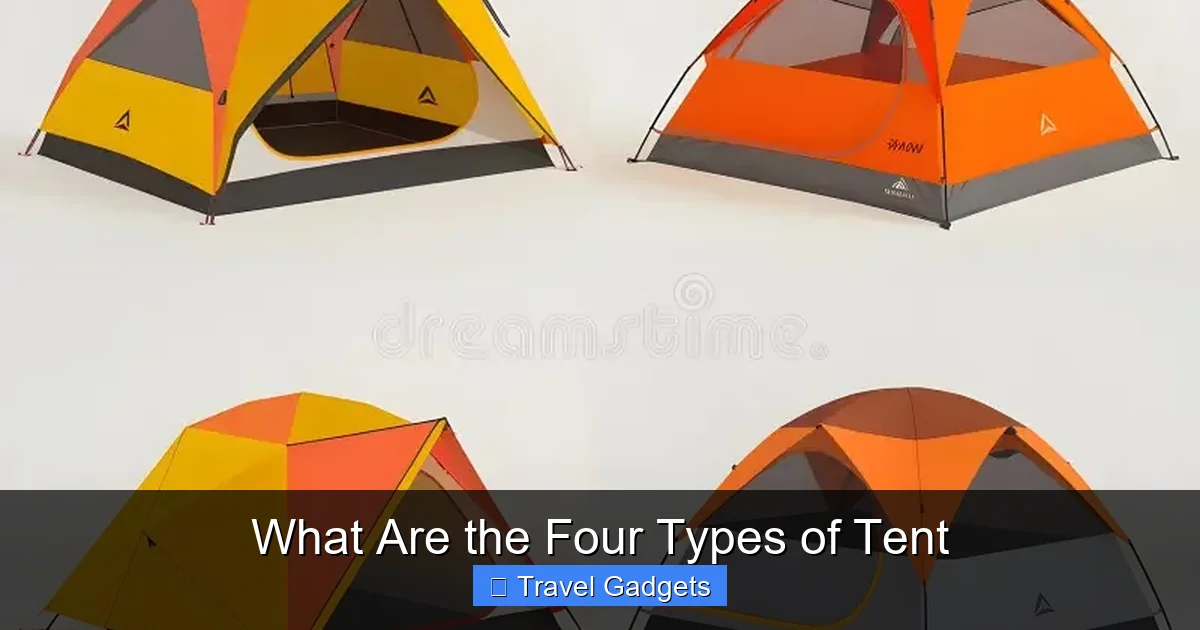
Tunnel tents are essentially elongated domes. Instead of a single dome shape, they resemble a long tube with rounded ends—hence the nickname “tunnel.” These tents use multiple flexible fiberglass or aluminum poles arranged parallel to each other, connected at intervals with webbing or sleeves.
The result? Huge interior volumes with high ceilings and lots of natural light. Tunnel tents are often used by car campers, RV users, and festival enthusiasts who need both privacy and space.
Advantages Over Other Types
Because tunnel tents have continuous sidewalls and no center poles blocking the view, they offer unobstructed movement and expansive layouts. You can fit cots, tables, chairs, and even small rugs inside. Plus, their cylindrical shape provides excellent strength against wind and snow.
They’re also highly customizable—many models allow you to add extensions, sunrooms, or extra vestibules. Some come with zippered partitions to create separate sleeping and living zones.
Downsides to Consider
However, tunnel tents aren’t without drawbacks. They’re heavier and harder to carry than dome tents, and setting them up requires patience and practice. The multi-pole system can be tricky if not labeled correctly.
Also, because they rely on internal support structures rather than external guylines for stability, improper staking can lead to sagging or collapse in strong winds.
Best Use Cases
Tunnel tents excel in environments where comfort and space matter most: basecamp setups, group gatherings, or winter expeditions. If you’re driving to your campsite anyway, the added weight and complexity become less relevant.
Brands like Outwell and Vango specialize in high-quality tunnel tents designed for European-style camping. Look for models with taped seams, double doors, and thermal linings for colder climates.
How to Choose Among the Four Types of Tent
With all these differences, how do you pick the right tent? Start by asking yourself a few questions:
– How many people will sleep inside?
– Where will you be camping (backcountry vs. drive-up)?
– What season(s) will you use it?
– Do you prioritize weight, space, or ease of setup?
Let’s break it down:
– Backpacking: Go with a dome tent—lightweight, packable, and reliable.
– Family Camping: Choose a cabin or tunnel tent for ample room and comfort.
– Budget Camping: An A-frame tent offers simplicity and low cost.
– Extended Stays: Tunnel or cabin tents provide the living space you need.
Don’t forget to check the tent’s season rating. A 3-season tent works for spring through fall, while 4-season tents are reinforced for blizzards and sub-zero temps. Ultralight 1-season tents are fine for warm-weather solo trips but won’t cut it in winter.
Tips for Maximizing Your Tent Experience
No matter which of the four types of tents you choose, there are ways to boost performance and comfort:
– Always use a footprint or ground tarp underneath to protect the tent floor.
– Secure guylines properly—especially in windy or wet conditions.
– Ventilate to prevent condensation; open mesh windows and adjust the rainfly.
– Store gear in dry bags to keep floors clean and organized.
– Practice setting up your tent at home before heading out.
Investing in quality stakes, repair kits, and replacement poles ensures your tent lasts through years of adventures.
Frequently Asked Questions
Which tent type is best for backpacking?
For backpacking, dome tents are usually the best choice due to their lightweight design, wind resistance, and ease of setup. Models like the MSR Hubba Hubba NX or REI Co-op Half Dome SLX are popular among hikers.
Can I use a dome tent for winter camping?
Most standard dome tents are rated for 3-season use and may not handle deep snow or extreme cold. For winter, consider a 4-season dome tent with a strong frame and snow skirt, such as the Hilleberg Anjan 2.
Are tunnel tents difficult to set up?
Yes, tunnel tents typically require more time and coordination to assemble because of their multi-pole system. However, many come with color-coded parts and instructions to simplify the process.
What’s the difference between a cabin tent and a regular dome tent?
The main difference is interior space. Cabin tents have tall, vertical walls that give you more headroom and floor area, while dome tents slope inward, offering less standing room but better wind resistance.
Do A-frame tents hold up in bad weather?
A-frame tents are less effective in strong winds or heavy rain compared to domes or tunnels. Their flat sides catch more wind, and water can pool at seams. Use them only in calm, dry conditions.
Can I modify my tent after purchase?
Some tents allow additions like vestibules, sunrooms, or extensions—especially tunnel and cabin models. Check manufacturer guidelines before modifying, as improper alterations can void warranties.