
Discover Georgia’s rich past with these 7 historic sites, offering fascinating insights into America’s story. Perfect for beginners, this guide makes planning your trip simple and exciting!
Planning a trip to a new place can feel a little overwhelming, right? You want to see the best sights, but where do you even start? Especially when it comes to history, it’s easy to get lost in dates and names.
Check the latest prices and available rooms before they sell out.
Don’t worry! Exploring historical treasures doesn’t have to be complicated. This guide will take you on an easy adventure through seven amazing historic sites in Georgia.
We’ll uncover stories that shaped the nation, making your trip both fun and educational. Get ready to step back in time and make some incredible discoveries!
Unlocking Georgia’s Past: A Beginner’s Guide
Welcome, fellow explorers! I’m James, your friendly guide to making USA trips a breeze. Georgia, a state brimming with Southern charm and deep historical roots, offers an incredible journey for anyone eager to connect with America’s fascinating past.
If you’re new to exploring historic sites, you might be wondering what to expect or how to make the most of your visits. This guide is designed just for you. We’ll focus on seven standout historic sites in Georgia that offer a fantastic introduction to the state’s diverse heritage, from ancient Native American settlements to pivotal moments in the Civil Rights Movement.
We’ll break down what makes each site special, why it’s worth a visit, and what kind of discoveries await you. Think of this as your personal roadmap to an unforgettable historical adventure. Ready to dive in?
The “Must-See” 7 Historic Sites in Georgia
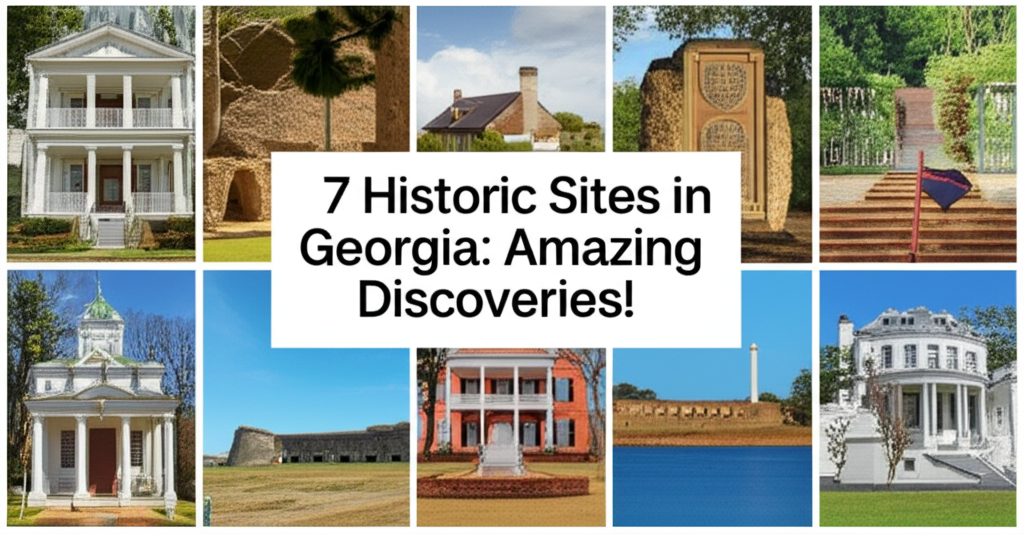
Georgia is packed with history around every corner, and choosing where to start can be the biggest challenge. To help you out, I’ve handpicked seven historic sites that offer a wonderful mix of experiences and stories. These locations are not only significant but also incredibly accessible for first-time visitors.
Find the Best Accommodation Deals
Compare prices from multiple booking platforms and find the best option for your stay.
Compare Hotel PricesEach site tells a unique part of Georgia’s story, ensuring you get a well-rounded understanding of its importance in American history. Let’s explore!
1. Ocmulgee Mounds National Historical Park
Imagine stepping onto land where people lived, worked, and worshipped over 1,000 years ago. Ocmulgee Mounds in Macon is an incredible window into the Native American cultures that thrived here long before European settlers arrived.
Find the Best Accommodation Deals
Compare prices from multiple booking platforms and discover the best stay options available.
⭐ Trusted by thousands of travelers
💰 Budget to luxury options available
This park protects 765 acres of significant archaeological sites, including the impressive Great Temple Mound and the Earth Lodge, which has been reconstructed and offers a look inside ancient life. Walking these grounds feels like a genuine discovery, connecting you to the earliest inhabitants of this land.
Why Visit Ocmulgee Mounds?
- Ancient History: Explore some of the most significant Native American history east of the Mississippi River.
- Immersive Experience: The reconstructed Earth Lodge provides a tangible sense of ancient dwellings.
- Beautiful Scenery: The park offers peaceful walking trails and scenic views perfect for a relaxing exploration.
Key Things to Discover:
- Earth Lodge Reconstruction: A full-scale replica showing ancient construction and design.
- Great Temple Mound: The largest and most impressive of the 60 mounds in the park, offering panoramic views.
- Mississippian Culture Artifacts: The park museum displays pottery, tools, and other items from this fascinating period.
Pro Tip: Wear comfortable shoes! You’ll be doing a lot of walking to explore the different mounds and trails within the park.
Learn more about planning your visit to Ocmulgee Mounds on the National Park Service website.
Best Stay Deals Available
Compare prices across top booking platforms and find the best deal for your stay.
Check Available Rooms2. Andersonville National Cemetery and Historic Site
This site tells a somber yet incredibly important story of the Civil War. Andersonville was the location of the infamous Confederate prison camp, Camp Sumter. Today, it serves as a memorial to the Union prisoners of war who suffered and died here.
Visiting Andersonville is a moving experience. The vast cemetery, with its rows of white headstones, is a powerful reminder of the sacrifices made. The prison site itself, with markers showing the original stockade’s extent, allows you to grasp the immense scale of the camp.
Why Visit Andersonville?
- A Chapter of American History: Understand the harsh realities of Civil War prisoner-of-war camps.
- Memorial and Remembrance: Pay respects to the thousands of soldiers who endured immense hardship.
- Educational Programs: The site offers excellent interpretive programs and exhibits to deepen your understanding.
Key Things to Discover:
- National Cemetery: Walk among over 13,000 graves, many marked with “Unknown.”
- Prison Stockade Site: See the outlines of the original prison walls and read about daily life.
- Andersonville Prison Chapel: A beautiful, serene structure dedicated to peace and remembrance.
- The National Prisoner of War Museum: This museum provides extensive exhibits and stories of POWs from various conflicts.
Budget Tip: Entrance to the cemetery and prison site is free. The POW Museum has a small admission fee, which is well worth the educational value.
3. Kennesaw Mountain National Battlefield Park
For those interested in Civil War history, Kennesaw Mountain is a battlefield with significant stories to tell. This park preserves 11 miles of the Northern Georgia campaign and features much of the land that was fiercely contested during the 1864 Atlanta Campaign.
You can explore preserved trenches, visit the battlefield’s summit for incredible views, and learn about the strategies and bravery of the soldiers. It’s a chance to connect with a pivotal moment in American history in a beautiful, natural setting.
Why Visit Kennesaw Mountain?
- Civil War Significance: Witness the terrain where critical battles took place leading to Atlanta’s fall.
- Breathtaking Views: The summit offers panoramic vistas of the surrounding countryside.
- Outdoor Exploration: Hike or bike along trails that trace the paths of armies.
Key Things to Discover:
- Cheatham Hill: Known as the “Bloody Angle,” this area saw intense fighting.
- Kolb Farm & Steading Battlefield: Explore another key defensive position.
- Visitor Center Exhibits: Learn about the battle with interactive displays and historical artifacts.
- Union Overlook: A prime spot for understanding troop movements and battlefield strategy.
Planning Tip: Check the weather before you go, as much of the exploration involves being outdoors. Guided ranger programs are often available and highly recommended!
4. Martin Luther King, Jr. National Historical Park (Atlanta)
Step into the birthplace and early life of one of the most influential figures of the 20th century. The Martin Luther King, Jr. National Historical Park in Atlanta is a deeply inspiring place that preserves the legacy of Dr. King and the Civil Rights Movement.
This park includes Dr. King’s childhood home, Ebenezer Baptist Church Heritage Sanctuary where he and his father preached, and the King Center, which houses the tombs of Dr. King and Coretta Scott King. It’s crucial history that shaped modern America.
Why Visit the MLK Jr. National Historical Park?
- In-Depth History: Connect with the life and work of Martin Luther King, Jr. and the struggle for civil rights.
- Powerful & Inspiring: Experience a site of profound historical and cultural significance.
- Free Access: Many parts of the park are free to visit, making it accessible for budget travelers.
Key Things to Discover:
- Dr. King’s Birth Home: Tour his childhood residence (reservations often needed).
- Ebenezer Baptist Church: Visit the historic sanctuary and feel the spirit this iconic church.
- The King Center: Explore exhibits and pay respects at the Eternal Flame and the tombs.
- Visitor Center: Watch an informative film and browse exhibits detailing the Civil Rights Movement.
Helpful Advice: Tours of Dr. King’s birth home are free but space is limited and requires advance booking online. Don’t miss out by waiting!
For more information, visit the official National Park Service page.
5. Wormsloe State Historic Site (Savannah)
Prepare to be enchanted! Wormsloe is arguably Georgia’s most iconic and picturesque historic site. Its famous avenue of live oaks draped with Spanish moss creates a breathtaking entrance that feels like stepping into a Southern fairytale.
Wormsloe was originally established as a colonial plantation by James Oglethorpe’s surveyor, Noble Jones. Today, it offers a glimpse into colonial life with a tabby (a type of concrete made from oyster shells) mansion ruin, a museum, walking trails, and stunning marshland views.
Why Visit Wormsloe?
- Unmatched Beauty: The moss-draped oaks are a photographer’s dream and offer an unforgettable visual experience.
- Colonial History: Learn about life on a colonial Georgia estate.
- Nature and Recreation: Enjoy exploring the diverse coastal ecosystem.
Key Things to Discover:
- The Oak Avenue: The star attraction, offering dozens of stunning photo opportunities.
- Tabby Ruin: The remains of Jones’s original 18th-century plantation home.
- Visitor Center & Museum: Features exhibits on colonial life and the site’s history.
- Nature Trails: Explore more of the beautiful coastal landscape.
Money-Saving Tip: Pack a picnic! While there are no on-site food services, the scenic beauty makes it a perfect spot for an affordable and memorable meal.
6. Etowah Indian Mounds State Historic Site (Cartersville)
Journey back over 1,000 years at Etowah Indian Mounds, another incredible site showcasing the advanced Mississippian culture that once flourished in Georgia. Overlooking the Etowah River, this impressive complex features six earthen mounds, including a large platform mound and a defensive ditch.
The site offers a fantastic museum filled with artifacts discovered there, like intricate pottery and detailed stone carvings. Walking the grounds and imagining the bustling community that once lived here is a truly remarkable experience.
Why Visit Etowah Indian Mounds?
- Significant Archaeological Site: Explore a well-preserved example of Mississippian mound-building culture.
- Rich Museum Collections: See some of the most important Mississippian artifacts found in the Southeast.
- Hands-On Learning: The site offers a visitor-friendly way to engage with ancient history.
Key Things to Discover:
- The Great Mound: The largest of the mounds, likely used for ceremonies or important residences.
- Woodland Indian Village Reconstruction: Offers a glimpse into later inhabitants’ lives.
- Museum Exhibits: Learn about the skills, art, and daily lives of the people who built the mounds.
- Sculpture of Eagle Warrior: A prominent and striking piece of ancient art.
Student Travel Tip: Many state historic sites offer discounted or free admission for students. Always check their official websites for current pricing and group rates.
Discover more by visiting the Georgia State Parks page for Etowah Indian Mounds.
7. Old Fort Jackson (Savannah)
Experience firsthand the history of Georgia’s coastal defenses at Old Fort Jackson, the oldest standing brick fort in the entire state. Built in 1808, this fort played a role in the War of 1812 and the Civil War.
Visiting Old Fort Jackson is an interactive and engaging experience. You can explore the ramparts, see demonstrations, and even fire a cannon (with supervision!). It’s a living history site that brings the past to life for visitors of all ages.
Why Visit Old Fort Jackson?
- Coastal Defense History: Understand the military importance of Savannah and its waterways.
- Living History: Enjoy staff in period dress and interact with historical demonstrations.
- Family-Friendly: The interactive elements make it fun and educational for kids and adults alike.
Key Things to Discover:
- Cannon Firings: Witness thrilling demonstrations of historic cannons.
- Battlements and Officer’s Quarters: Explore the fort’s structure and imagine life as a soldier.
- Interpretive Programs: Learn about the fort’s history and the soldiers who served there.
- Museum: Discover artifacts and exhibits related to the fort and its context.
Traveler Insight: Old Fort Jackson is part of the Savannah-Lowcountry history circuit. Consider combining it with other Savannah attractions for a comprehensive historical tour.
Planning Your Georgia Historic Adventure: A Quick Table
To help you visualize your trip, here’s a quick reference table for these amazing historic sites in Georgia. This can help you decide which ones fit your interests and your travel route best.
| Site Name | Location | Primary Historical Focus | Best For | Estimated Visit Time |
|---|---|---|---|---|
| Ocmulgee Mounds NHP | Macon | Native American (Mississippian Culture) | Ancient History & Archaeology Enthusiasts | 2-4 hours |
| Andersonville NHS | Andersonville | American Civil War (POW Camp) | War History & Remembrance | 2-3 hours |
| Kennesaw Mountain NBP | Kennesaw | American Civil War (Atlanta Campaign) | Battlefield Exploration & Hiking | 3-5 hours |
| MLK Jr. NHP | Atlanta | Civil Rights Movement & Dr. King’s Life | Social Justice & Modern American History | 3-6 hours |
| Wormsloe State Historic Site | Savannah | Colonial Georgia History & Southern Beauty | Photography & Scenic Beauty Lovers | 1-3 hours |
| Etowah Indian Mounds SHS | Cartersville | Native American (Mississippian Culture) | Archaeology & Ancient Art | 2-3 hours |
| Old Fort Jackson | Savannah | 19th Century Coastal Fortifications | Living History & Family Fun | 1-2 hours |
Making the Most of Your Historic Site Visits
Now that you have a fantastic list of 7 historic sites in Georgia, let’s talk about how to make your exploration even better. Whether you’re a seasoned traveler or just starting out, a little planning goes a long way.
Preparation is Key
Research: Before you go, visit the official website for each site. Look for operating hours, admission fees, special events, and any tips they provide for visitors. This step is crucial for avoiding surprises!
Tickets and Reservations: Some popular attractions, like Dr. King’s birth home tour, require advanced reservations. Check this early in your planning. For others, purchasing tickets online can sometimes save you time.
During Your Visit
Wear Comfortable Shoes: You’ll be doing a lot of walking, often on uneven terrain. Comfortable footwear is non-negotiable for a pleasant experience.
Stay Hydrated: Especially in Georgia’s warm climate, carry water bottles. Many sites have water fountains where you can refill.
Take Your Time: Don’t rush! History is best absorbed when you have the chance to reflect. Arrive with enough time to explore at a relaxed pace.
Engage with Staff and Rangers: Park rangers and site interpreters are incredible resources. They can offer insights, answer questions, and share stories you won’t find in guidebooks.
Budget-Friendly Tips
Look for Free Days: Many parks and historic sites offer free admission on certain days of the year (e.g., National Park Service free days). Plan your trip accordingly if possible.
Pack Snacks or Lunch: Food options at historic sites can be limited or expensive. Bringing your own picnic is a great way