
Ready to hit the trails? A successful tent camping trip starts with knowing exactly what to bring—no overpacking, no underpreparing. From reliable shelter and warm sleeping systems to practical travel gadgets and first-aid essentials, this guide covers every item you’ll need. Smart planning turns a stressful outing into a relaxing retreat.
Camping under the stars is one of life’s purest joys—but only if you’re prepared. Whether you’re setting up your first tent at a family campground or heading deep into the backcountry, having the right gear makes all the difference. The secret isn’t bringing everything you own; it’s bringing the right things in the right amounts. This guide walks you through exactly what to bring on a tent camping trip so you can focus less on logistics and more on the magic of nature.
Check the latest prices and available rooms before they sell out.
From choosing a dependable tent to packing lightweight yet effective cooking tools, we’ve got you covered. And because modern adventurers love smart solutions, we’ll also spotlight some top travel gadgets that simplify setup, extend battery life, and enhance comfort. Let’s unpack everything you need for a smooth, enjoyable, and stress-free outdoor experience.
Key Takeaways
- Essential Shelter & Sleep Gear: A sturdy tent, quality sleeping bag, and insulated pad are non-negotiable for comfort and safety.
- Weather-Proof Clothing: Layering with moisture-wicking base layers, insulating mid-layers, and waterproof outer shells keeps you dry and warm.
- Reliable Cooking & Eating Supplies: Portable stoves, fuel, utensils, and reusable containers make meals simple and eco-friendly.
- Navigation & Safety Tools: A map, compass, headlamp, and first-aid kit ensure you stay on track and handle emergencies.
- Travel Gadgets That Simplify Camping: Solar chargers, compact lanterns, and multi-tools add convenience without bulk.
- Packing Smart: Use compression bags, organize by category, and test gear before departure to avoid surprises.
- Sustainability Matters: Bring reusable items, pack out all trash, and respect nature to protect the outdoors for others.
📑 Table of Contents
- 1. Essential Shelter: Your Home Away from Home
- 2. Sleeping System: Stay Warm All Night Long
- 3. Clothing: Dress for Every Layer of Weather
- 4. Cooking & Eating Gear: Fuel Your Adventure
- 5. Navigation & Safety Essentials
- 6. Travel Gadgets That Make Camping Easier
- Conclusion: Pack Smart, Stay Ready, Enjoy More
1. Essential Shelter: Your Home Away from Home
Your tent is more than just a roof—it’s your sanctuary. Picking the right one ensures protection from wind, rain, and wildlife while keeping you cozy during chilly nights.
Choose the Right Tent
Look for a 3-season model if you’re camping in spring, summer, or fall. It should have a durable rainfly, strong poles, and a floor rated for water resistance. For solo trips, a 1-person tent offers privacy and warmth. Families will benefit from a 4–6 person dome or cabin-style tent with extra space.
Pro tip: Always pitch your tent at least 200 feet from water sources and avoid low-lying areas where cold air pools. Test your setup at home before leaving!
Groundsheet & Stakes
Even the best tents need protection. Pack a heavy-duty groundsheet to prevent wear and tear on the floor. Bring extra stakes (aluminum or steel) in case some get bent or lost. If you’re in rocky terrain, consider using rocks or logs to secure guy lines instead.
Footprint or Tarp
A footprint (the custom cut-out liner that fits under your tent) extends the life of your tent floor. If you don’t have one, a large camping tarp can serve as an alternative—just make sure it doesn’t touch the fabric when wet.
2. Sleeping System: Stay Warm All Night Long
Find the Best Accommodation Deals
Compare prices from multiple booking platforms and find the best option for your stay.
Compare Hotel PricesVisual guide about What to Bring on a Tent Camping Trip
Image source: i.pinimg.com
Find the Best Accommodation Deals
Compare prices from multiple booking platforms and discover the best stay options available.
⭐ Trusted by thousands of travelers
💰 Budget to luxury options available
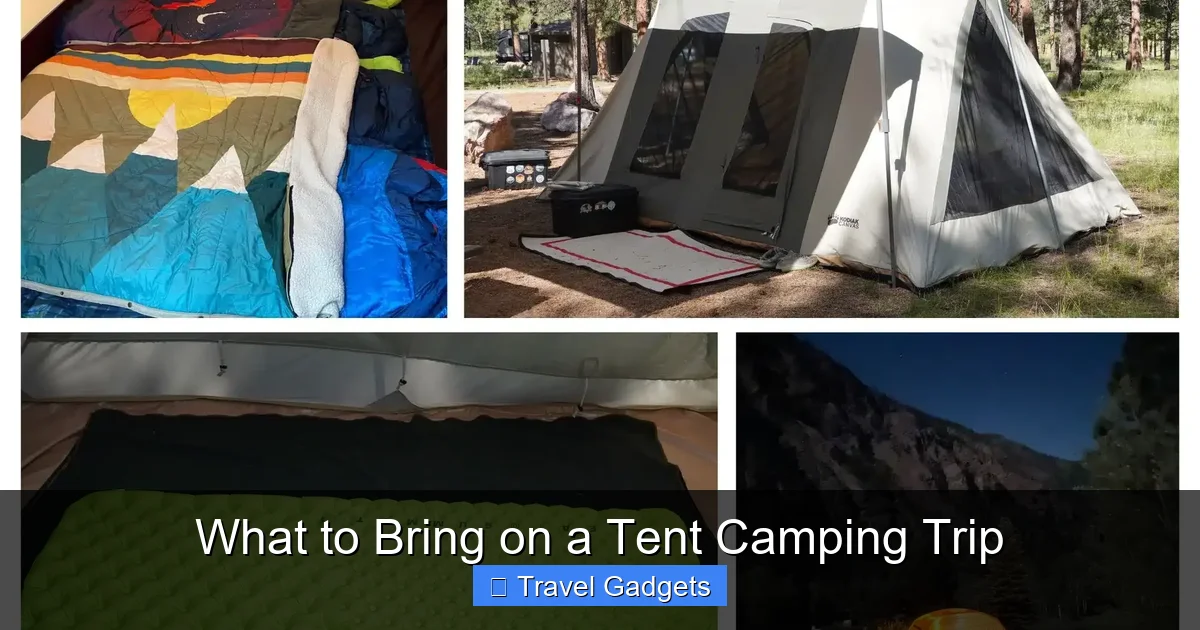
Sleeping well is key to enjoying your trip. Cold nights can ruin even the most beautiful sunrise, so invest in a proper sleep system.
Sleeping Bag
Select a bag rated for the lowest temperature you expect. Down bags are lighter and compress better but lose insulation when wet. Synthetic bags perform well in damp conditions and are more affordable. Look for hooded designs to keep heat in.
For shoulder season trips (spring/fall), a mummy-style bag with draft collar and zipper baffle offers maximum warmth. Don’t forget to test it at home—nothing beats a real night in the wild!
Best Stay Deals Available
Compare prices across top booking platforms and find the best deal for your stay.
Check Available RoomsSleeping Pad
R-value measures how well your pad insulates you from the ground. Aim for R-3.5 or higher in cool weather. Inflatable pads are comfortable and pack small; self-inflating pads combine cushioning with convenience. Foam pads are durable and don’t require pumping, making them ideal for ultralight hikers.
Tip: Pair your pad with a fleece or down topper for extra coziness without adding much weight.
Pillow & Bivy Sack (Optional)
A small inflatable pillow saves space and adds comfort. If you’re sensitive to condensation or bugs, a bivy sack goes over your sleeping bag for added protection. Just remember—bivies reduce breathability, so use them wisely.
3. Clothing: Dress for Every Layer of Weather
Visual guide about What to Bring on a Tent Camping Trip
Image source: tomotravelcamping.com
What you wear determines whether you shiver or sweat. Layering is the name of the game.
Base Layers
Moisture-wicking fabrics like merino wool or synthetic blends keep sweat away from your skin. Avoid cotton—it holds moisture and takes forever to dry. Long-sleeve tops and leggings work great for cooler evenings.
Mid-Layers
Fleece jackets, wool sweaters, or lightweight down vests trap heat efficiently. These go over your base layer and under your shell. Adjust as needed based on activity level.
Outer Shell
A waterproof and breathable jacket is essential. Look for features like pit zips (vents under arms), adjustable cuffs, and a hood. Pair it with rain pants if you anticipate heavy rain.
Camp Shoes & Extra Socks
Bring comfortable shoes for lounging around camp—like sandals or sneakers. Pack at least one extra pair of wool or synthetic socks. Dry feet = happy camper!
Headwear & Gloves
A wide-brimmed hat protects you from sun exposure. In cooler months, pack beanies and thin liner gloves. Even in summer, mornings and evenings can be chilly near the ground.
4. Cooking & Eating Gear: Fuel Your Adventure
Visual guide about What to Bring on a Tent Camping Trip
Image source: thumbs.dreamstime.com
Meals should be easy, delicious, and mess-minimal. With the right tools, camp cooking becomes second nature.
Cooking Stove
Canister stoves (like Jet Boil) are fast and reliable for boiling water. Liquid fuel stoves (MSR WhisperLite) work in extreme cold but take longer to ignite. Alcohol stoves are ultra-lightweight but less efficient. Choose based on trip length and climate.
Fuel Canisters & Adapters
Check compatibility between stove and fuel. Bring spare fuel—even on short trips. In cold weather, hand-warm your canister before lighting.
Pots, Pans & Utensils
Opt for nesting cookware sets. Include a spatula, spoon, and knife. Don’t forget a pot lid—it doubles as a plate or bowl!
Eating Gear
Bring lightweight bowls, sporks, and reusable cutlery. A camp mug or collapsible cup is handy for coffee or hot chocolate. Avoid disposable plastic—opt for bamboo or stainless steel instead.
Cooler & Food Storage
Use a hard-sided cooler with freezer packs for perishables. Keep meat separate from veggies to avoid cross-contamination. Consider bear-proof containers if you’re in grizzly country.
5. Navigation & Safety Essentials
Getting lost is no fun—and can be dangerous. Be ready with these critical tools.
Map & Compass
No GPS? No problem. Learn basic navigation skills before your trip. Carry both paper maps and digital backups (on your phone). Know how to read contour lines and use a compass bearing.
Headlamp & Spare Batteries
Hands-free lighting is a game-changer. LED headlamps last longer and shine brighter than traditional bulbs. Always carry extras—especially if you’re camping off-grid.
First-Aid Kit
Include bandages, antiseptic wipes, tweezers, blister treatment, pain relievers, and any personal medications. Add a CPR face shield and emergency blanket for serious situations.
Multi-Tool or Knife
A compact Leatherman or Swiss Army knife handles repairs, food prep, and emergencies. Just make sure it’s legal where you’re going.
Whistle & Fire Starter
Attach a whistle to your pack—it’s louder than shouting and conserves energy. Waterproof matches or a ferro rod ensure you can start a fire even in wet conditions.
6. Travel Gadgets That Make Camping Easier
Modern tech doesn’t have to weigh you down. These travel gadgets add comfort without clutter.
Portable Power Bank
Keep phones charged for photos, navigation, and emergencies. Solar-powered banks (like Goal Zero Nomad) let you recharge in daylight—perfect for long trips.
Compact Lantern
LED camping lanterns provide bright, hands-free light. Look for ones with dimmers and USB charging ports. Avoid candle lanterns—they pose fire risks and pollute the air.
Collapsible Sink & Washing Kit
A portable basin with biodegradable soap lets you wash dishes cleanly. Hang it from a tree with a strap—no sink required!
Bug Repellent & Sun Protection
Bring DEET-based repellent for mosquitoes and ticks. Pack reef-safe sunscreen and lip balm with SPF. A wide-brim hat completes your sun defense.
Trash Bag & Bear Can
Carry a large Ziploc bag for packing out waste. In bear country, use a bear canister or hang food high (“bear hang”) per local regulations.
Conclusion: Pack Smart, Stay Ready, Enjoy More
Knowing what to bring on a tent camping trip transforms anxiety into excitement. Focus on quality over quantity, prioritize versatility, and always test your gear beforehand. Whether you’re chasing dawn over a mountain lake or roasting marshmallows under a canopy of stars, preparation ensures every moment counts.
And remember—camping is about connection, not perfection. Leave no trace, listen to your body, and embrace the unexpected. With the right checklist and a few clever travel gadgets, your next adventure will be nothing short of extraordinary.
Frequently Asked Questions
How many people does a 2-person tent hold?
A 2-person tent typically fits two adults comfortably, though some models accommodate three with gear stored inside. Always check manufacturer specs for exact dimensions and weight limits.
Do I need a sleeping bag rated below the lowest expected temperature?
Yes. Experts recommend choosing a sleeping bag rated 5–10°F lower than your anticipated minimum temperature to stay warm and safe, especially if you run cold.
Can I cook without a stove?
You can eat pre-cooked meals or use a fire pit if permitted. However, a portable stove offers speed, control, and reliability in most conditions.
What’s the best way to pack a backpack for camping?
Place heavier items close to your back and centered. Pack frequently used items (snacks, rain jacket) in front or top compartments. Use compression sacks to save space.
Should I bring my laptop or tablet to camp?
Only if absolutely necessary. They drain batteries quickly and add weight. Instead, enjoy screen-free time—read a book, journal, or stargaze!
Is it okay to sleep in the same clothes all weekend?
Not ideal. Change into fresh base layers each day to prevent odor buildup and chafing. Use odor-eliminating sprays if reusing clothes briefly.